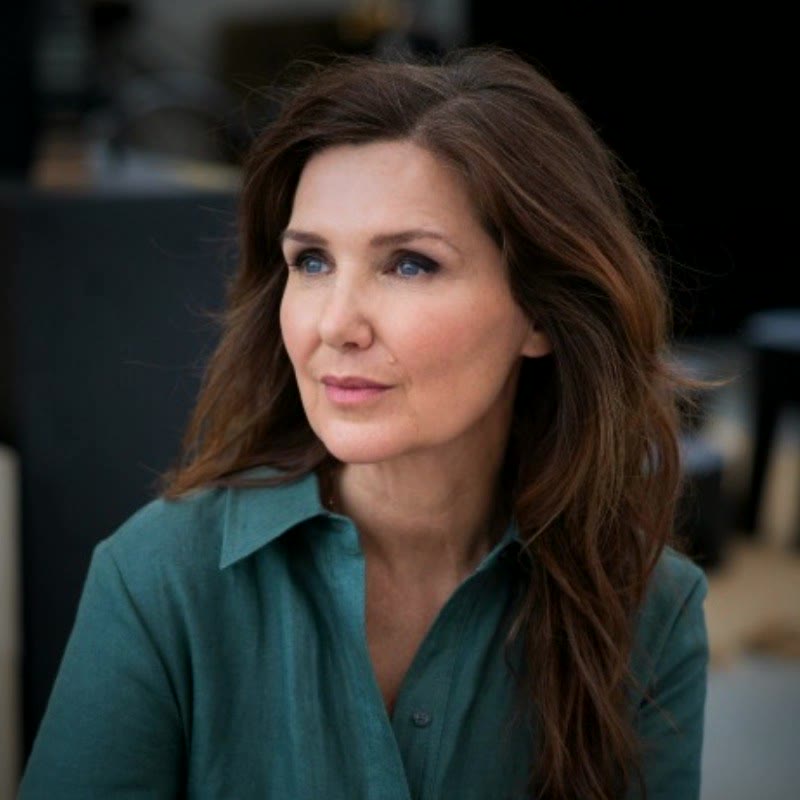
For the third edition of Reflections on Bright Leadership, we sat down with Debbie Klein. A conversation about autonomy as the foundation of leadership, about what technology and meaning ask of each other, and about an underestimated force that rarely makes the quote-worthy moment: consistency.
What is the essence of leadership talent for you, and how do you recognise it immediately?
For me, leadership talent sits in the ability to be yourself and to create space for others. Autonomy. Authenticity. Not confusing vulnerability with insecurity. Daring to say: "I do not know, but let us figure this out together." How you handle that, of course, also depends on the company and the phase the organisation is in.
Beyond that: leaders exist only by the grace of their followers. Not because they have to, but because they trust you, your intent and the direction you are going in together.
Which leadership challenge should leaders truly prepare for in the coming years?
The biggest challenge will be dealing with technology. Technology evolves fast, globally, and exponentially. Everything has moved faster in the last 30 years than in the 2000 years before. That asks for agility in leaders. It asks for a company culture where there is room to experiment, and to acknowledge where your own expertise adds something and where you need to ask others for help.
For perhaps the first time in years, we are being confronted with a younger generation that teaches an older one how to use technology, where knowledge has traditionally flowed the other way around.
At the same time, there is a clear counter-current: alongside the digital revolution, there is a call for meaning, certainly among the convenience generation. Why am I doing this work? What do I want to contribute? What makes me happy in the long run? The combination of both, work-life balance, an ageing population, accelerating technology, and finding the balance between them: that seems to me to be the biggest challenge of the coming years.
What should leaders stop doing, because it no longer works?
For me, that is threefold. Stop running the company purely top-down. Stop pretending you have all the answers. Stop steering only on financial incentives. That time has passed.
The world is too complex to lead from the classic perspective. Control as an end in itself is paralysing. People want to contribute, not just execute. There is a demand for meaning, growth, autonomy and recognition. Combine that with fair compensation, of course, but compensation alone never stands on its own.
Which leadership decision made you and your team visibly stronger?
The deliberate shift from individual steering to drawing on the strength of the collective, which works well in combination with our entrepreneurial culture.
Instead of focusing primarily on what needs to be better, we have made it our practice to make visible, anchor and strengthen what already goes well. By not treating successes as self-evident, but actively recognising and embedding them in how we work, we create a firm base to build on.
At the same time, we have given space to ownership and entrepreneurship within the team. By inviting people to take initiative and pick up responsibility, you create more energy, engagement and speed.
Leaders exist only by the grace of their followers. Not because they have to, but because they trust you, your intent and the direction you are going in together.
Which trait in other leaders genuinely gives you energy?
The ability to connect vision, inspiration and innovation. Leaders who stay curious, create space for new ideas, and stimulate innovation. Who make sure that an organisation does not just have a direction, but also keeps growing and adapting.
Leaders who paint a clear and meaningful picture of the future and then bring it to life in an inspiring way. So not only making clear where the journey is heading, but also why it matters. That gives me energy. It inspires.
Which way of leading costs you energy?
Micromanagement, in whatever form. There are professions of course where every detail matters and where it is necessary. For me it slows things down and often costs a lot of energy.
I also genuinely enjoy looking for creative solutions and asking questions. Micromanagement is the opposite of that.
Which leadership quality is structurally underestimated?
Consistency. It is an underestimated leadership quality because it is less visible than big decisions or inspiring moments, while it is in fact the foundation of trust.
Being predictable in behaviour, choices and communication creates clarity and stability. People know where they stand, which brings calm, trust and better collaboration within a team.
Alongside the big vision and the inspiring story: doing what you say, every single day. Trust grows in the small moments.
Consistency does not make a quote. But it holds everything else together.
Which insight about people do you wish you had understood ten years earlier?
Ten years earlier, I would have wanted to understand that sometimes people do not do something not because they do not want to, but because they simply do not know how. Through insecurity, lack of clarity, or the influence of the company culture they are in.
Once you see that, you look and respond differently. Instead of judging, you tune in faster to what is really going on. By listening better to what sits underneath the behaviour, you get more understanding, better communication and ultimately better collaboration.
Learning to dose my own volume has played a major role here as well.
Bright Leadership in your words?
To me, Bright Leadership is people-oriented and decisively autonomous leadership: clear in direction, consistent in behaviour, and focused on growing both people and organisation.
It speaks to the collective and anchors itself in a culture where people feel safe to contribute, learn and take responsibility. That is how shared ownership emerges, and people start to feel collectively responsible for delivering results.
Thank you Debbie for this inspiring conversation. On her recommendation, we will speak with Laura Vogelsang next. Vol. IV appears later this year.
Take the reflection yourself.
Answer the same nine questions Debbie answered. Receive your own personal reflection. Generated in real time.
Begin your reflection →